
How to Make an Elden Ring-Style Soulslike Game With AI — Free Combat Code & Assets
Build a small original dark-fantasy action RPG around readable attacks, stamina, dodge timing and a memorable boss. Reuse a controller before writing combat-specific rules.
Reimagine the mechanics in your own style: original characters, artwork and world. This independent guide builds Ashen Pilgrim, rather than recreating Elden Ring or its commercial assets.
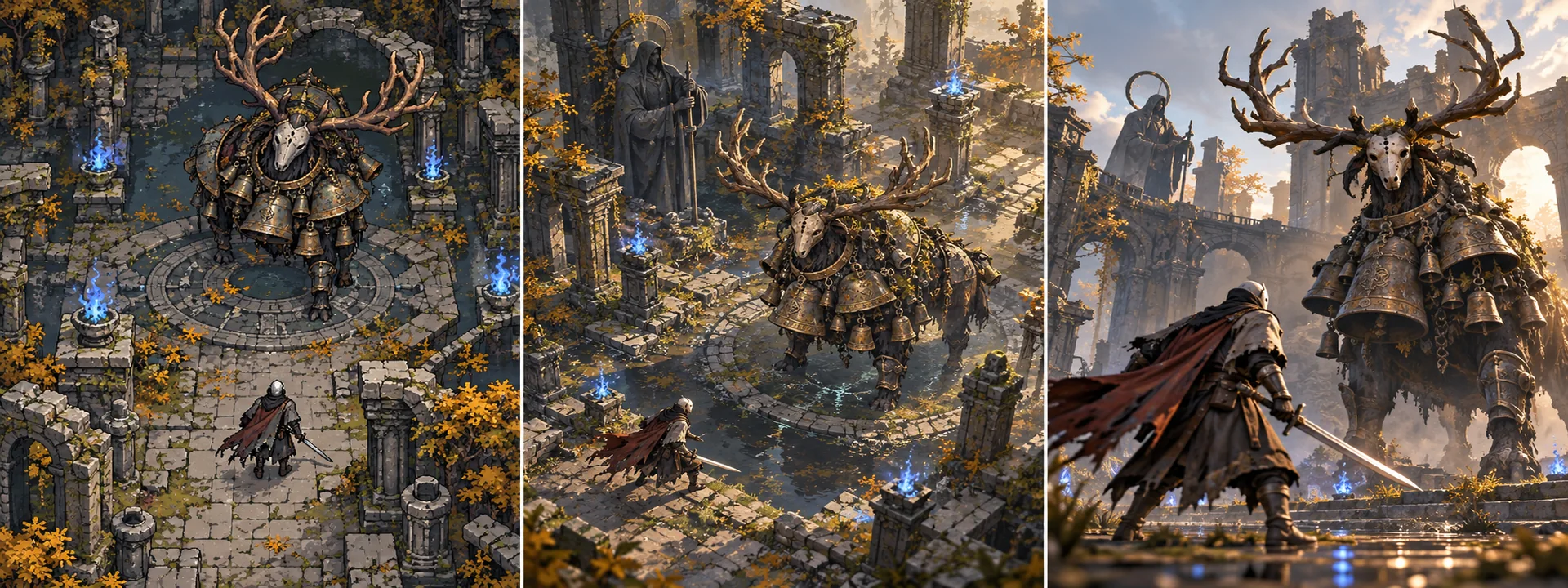
You are creating your own original game inspired by general mechanics. Elden Ring is a reference, not an exact-copy brief or official project.
Choose the game you can finish
Your first milestone: One ruined courtyard, one weapon, one regular enemy, a three-pattern guardian, one checkpoint, equipment and saved progression. Finish this slice before multiplying maps, characters or mechanics.
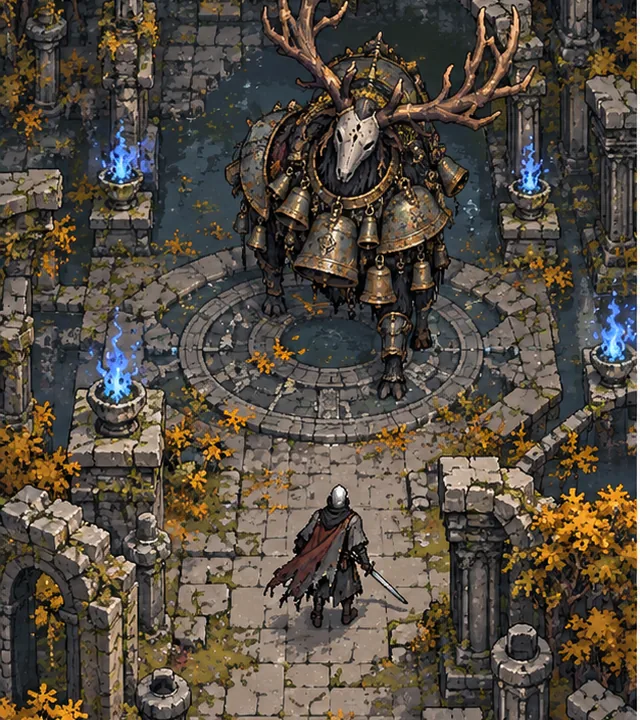
2D soulslike
Side-view sword combat, ledges and short dodge windows. Use 2D physics and sprite hitboxes; control complexity is lower than a third-person RPG.
MAKE MY OWN 2D GAME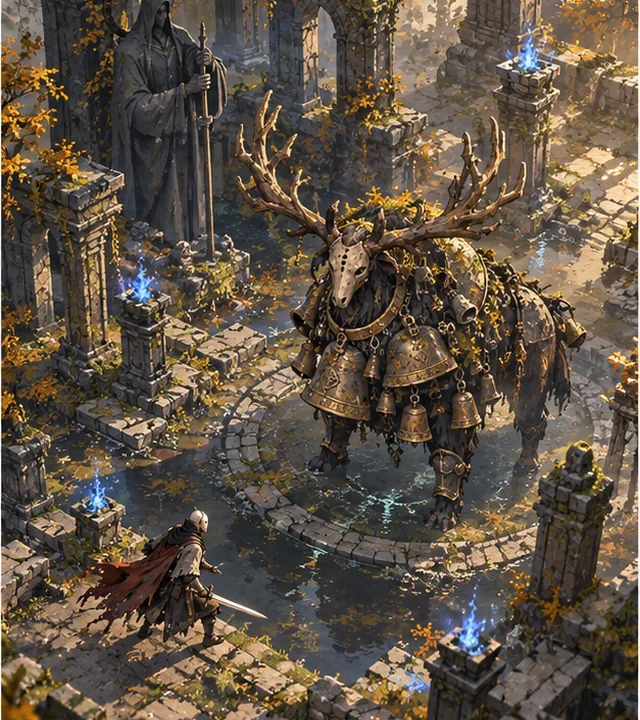
2.5D soulslike
A fixed isometric camera with 3D or layered actors. Combat lives on a ground plane; account for depth, height and occlusion.
MAKE MY OWN 2.5D GAME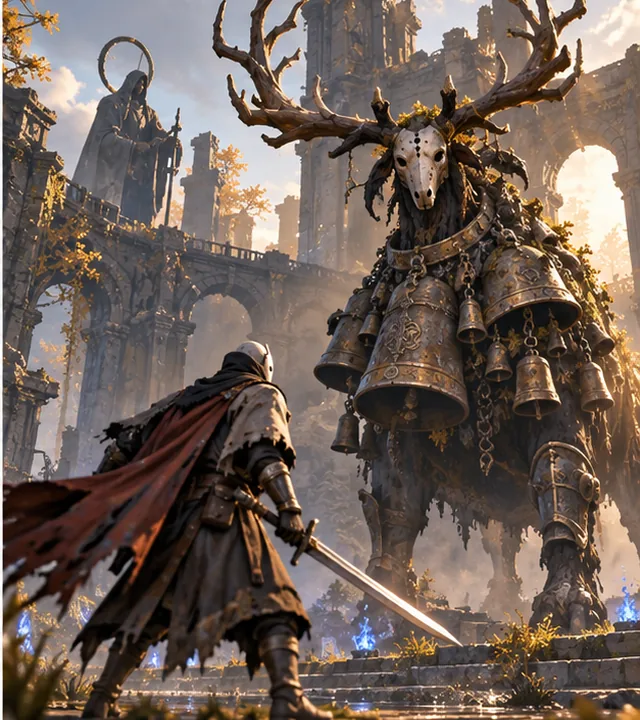
3D soulslike
Third-person character movement, lock-on, stamina and animation-driven melee. Reuse controller code but replace restricted art and author your own combat.
MAKE MY OWN 3D GAMESee what original creators have built
Godot 4 third-person controller
A third-person movement and camera example. Adapt its controller without assuming it supplies stamina, lock-on, a Soulslike combat system or commercial art. No verified AI-authorship claim.
Code and asset rights: MIT scripts/scenes/shaders; art is CC BY-NC-SA 4.0
Compatibility: Godot 4 controller code only for a commercial starter. Replace the non-commercial textures/models; test all scene references after removal.
VIEW ORIGINAL GITHUB PROJECT ↗Source checked 11 October 2026 · pinned review; not whole-project runtime certification. Open the creator’s repository for genuine media; concept art here is separate.Godot demo projects
Feature-sized editor projects for movement, physics, tilemaps and UI. No verified AI-authorship claim.
Code and asset rights: MIT code; retain notices and inspect each demo’s asset credits
Compatibility: Use a demo branch matching your Godot editor; individual examples supply systems, not a complete game.
VIEW ORIGINAL GITHUB PROJECT ↗Source checked 11 October 2026 · pinned review; not whole-project runtime certification. Open the creator’s repository for genuine media; concept art here is separate.Step by step: build Ashen Pilgrim
These are an original implementation plan with explicit checks, not claims that every proposed engine integration has already been executed.
- STEP 1
Build the courtyard and target lock
Greybox a spawn, checkpoint, enemy lane and boss space. Reuse movement/camera code. Lock-on chooses visible nearby targets and clears invalid/dead targets; never rotate the player instantly through obstacles.
Expected result: A safe, readable combat space and stable camera.
Try this check: Circle the target, pass a pillar and remove the target mid-lock.
2D · Original AI-generated concept · not gameplay - STEP 2
Make stamina an explicit rule
Define maximum stamina, attack/dodge/block costs and a regen delay. Reject actions that cannot pay their cost; spend once when the action starts. Movement stays responsive while recovery limits attacks.
Expected result: Actions have understandable limits without sluggish walking.
Try this check: Hold attack at zero stamina, interrupt an attack and pause during regeneration.
Controls → state → feedbackHold attack at zero stamina, interrupt an attack and pause during regeneration.
Acceptance check · run this in your own project - STEP 3
Separate attack phases from visuals
Author windup, active and recovery durations. Apply damage only during the active phase, once per target per attack ID. Animation events may help presentation but cannot be the sole owner of damage.
Expected result: Sword hits follow visible commitment and recovery.
Try this check: Overlap the same target for several frames: only one hit occurs per swing.
2.5D · Original AI-generated concept · not gameplay - STEP 4
Add dodge and blocking fairly
Give dodge a finite invulnerable interval, recovery and stamina cost. A block checks facing and guard strength, then spends stamina. Show both rules through animation/audio and clear HUD feedback.
Expected result: Players can read, evade and punish attacks.
Try this check: Test damage immediately before, inside and after the dodge window.
Validate → change once → show resultTest damage immediately before, inside and after the dodge window.
Acceptance check · run this in your own project - STEP 5
Author a guardian, not inflated stats
Use three patterns: delayed overhead, sweeping arc and short charge. Telegraph each, commit to its target and allow recovery. Phase two changes one pattern rather than doubling all damage.
Expected result: A learnable original boss with different safe responses.
Try this check: Run deliberate dodge/counter strategies and check a careless attack-spam strategy cannot trivialise the fight.
3D · Original AI-generated concept · not gameplay - STEP 6
Add checkpoints, equipment and saves
Checkpoint restores the player and resets intended enemies. Save unlocked checkpoint IDs, gear IDs and earned progress; transient attack states stay out of the save. Equip stats consistently and validate older saves.
Expected result: A complete courtyard run with return and progression.
Try this check: Die during an attack, reload after victory and swap equipment without refilling resources unexpectedly.
Save → reload → compareDie during an attack, reload after victory and swap equipment without refilling resources unexpectedly.
Acceptance check · run this in your own project
Start with a working reference
The related 2D workshop has a smaller runnable practice loop and public source. It is separate from this multi-dimension production roadmap.
Open the practical starter workshop →
Free code, assets and systems you can reuse
Godot supplies physics, input mapping, UI controls, animation tools, navigation and file APIs. Its demos illustrate individual systems. Reuse those before asking ChatGPT, Claude Code or Codex to recreate them; AI still has to adapt your game-specific rules. Work avoided is not a measured credit-saving percentage.
Kenney Tiny Dungeon
Original creator: Kenney.
CC0 · tiles for a 2D combat courtyard.
View assets, real previews & licence ↗Kenney UI Pack
Original creator: Kenney.
CC0 · health/stamina bars and equipment controls.
View assets, real previews & licence ↗Animation, UI, audio, inventory and saving
Keep one art scale and test one imported model or sprite first. Reuse engine animation states and native UI focus. Use original sound synthesis or an exact cleared audio pack. Define inventory/collection IDs and transaction rules as game data; a visual pack cannot implement those rules. Godot’s saving tutorial supplies a file-workflow starting point; add schema validation, migrations and error handling.
Godot saving tutorial ↗ · Animation integration guide · Add one code or asset resource
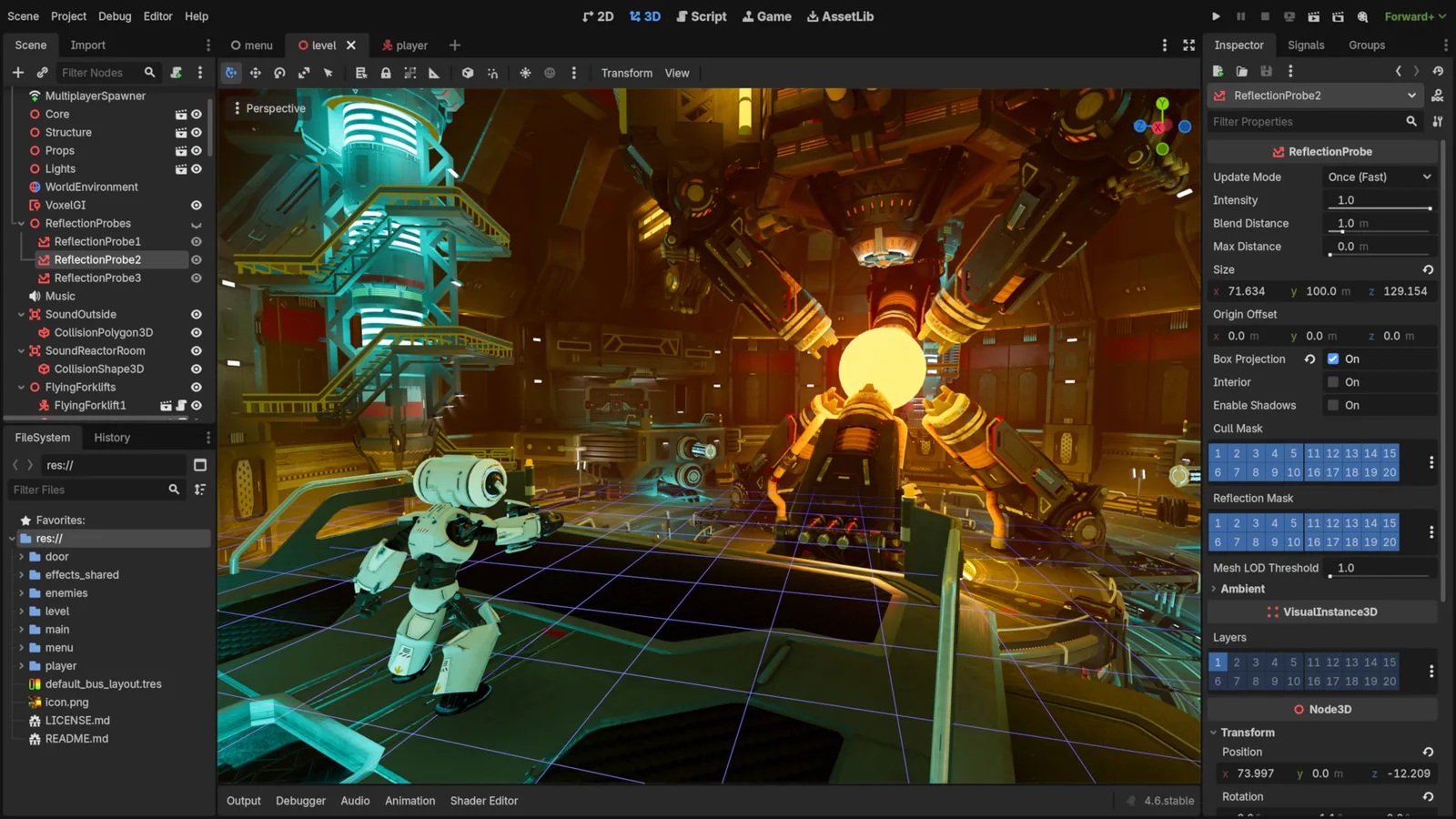
Godot Engine contributors · Original screenshot ↗ · CC BY 4.0 ↗. Resized and compressed.
Godot Engine contributorsGodot
Free, open-source game editor for 2D and 3D projects, with scene, animation and interface tools.
KayKit Dungeon Pack
Modular dungeon architecture and props for fantasy room building.
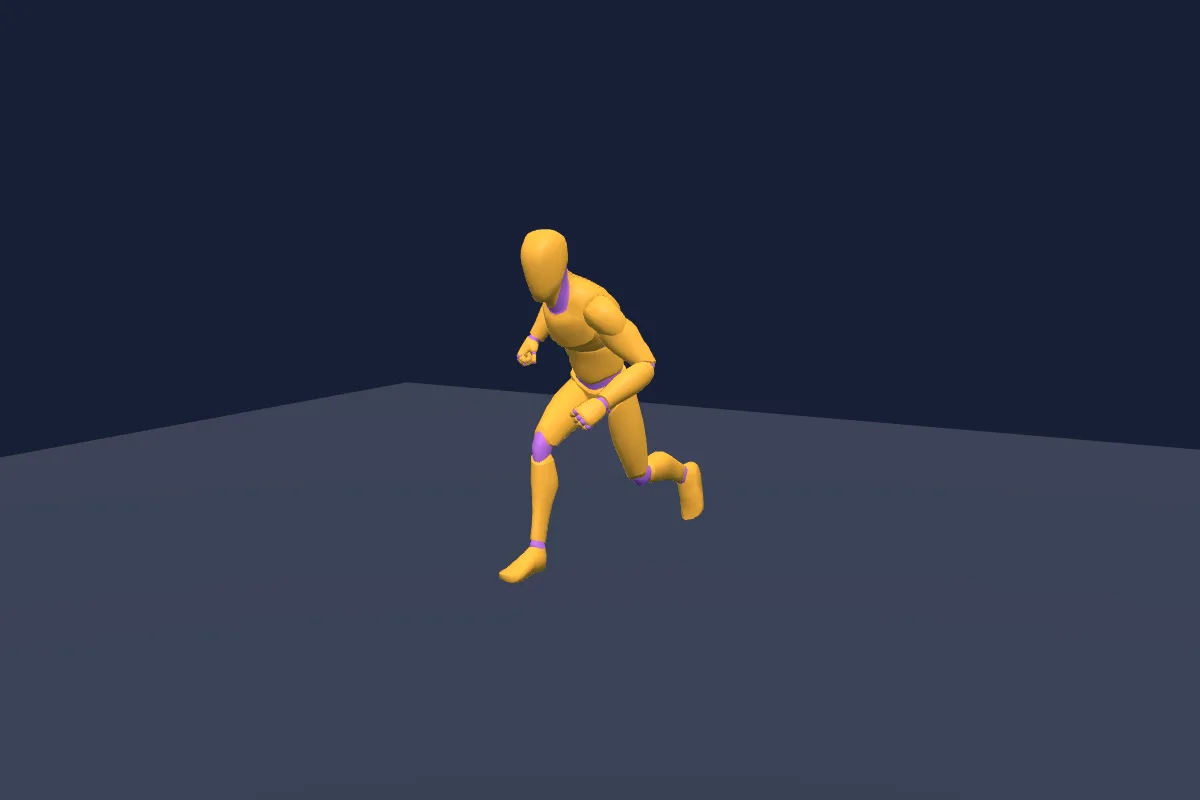
Universal Animation Library
Humanoid animation library with a free subset and expanded paid editions.
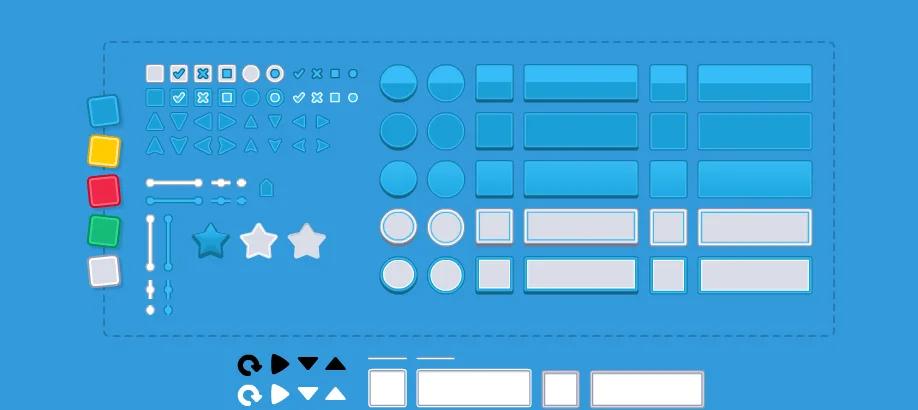
UI Pack
Interface artwork for buttons, panels and sliders.
Optional paid assets are for an evidenced gap such as extra animation actions or a consistent environment set. Keep the free baseline beside the paid option. Browse free resources · Compare optional paid resources. Check current prices at the creator; no commission-based ranking or invented improvement percentage.
Licensing summary, not legal advice. Before selling or publishing, check exact official terms. Finished-game use, reselling raw files and including files in a source/template product are separate permissions; art, audio, trademarks and promotional media have separate rights.
COPY PROMPT TO YOUR AI
Copy to make your own game. Choose a dimension below; each complete prompt includes the original concept, source links, controls, systems, phased work, checks and upgrades. Nothing is sent to an AI automatically.
Review the prompt, then copy it or select its text manually.
Your 2D game-building prompt
Review or manually copy this prompt
Your 2.5D game-building prompt
Review or manually copy this prompt
Your 3D game-building prompt
Review or manually copy this prompt
Make Your Game Even Better
Clearer attack tells
Improve windup pose, ground warning and impact sound before adding weapons.
Inspect the free resource and optional paid editions →
Review or manually copy this prompt
Equipment choices
Add one shield and one heavy weapon with distinct stamina/recovery tradeoffs.
Inspect the free resource and optional paid editions →
Review or manually copy this prompt
Boss adaptation
Add spacing-aware pattern selection and an earned second phase, profiling effects and animation transitions.
Inspect the free resource and optional paid editions →
Review or manually copy this prompt
Questions before you build
Does a free third-person controller include Soulslike combat?
No. It can supply movement and camera scaffolding. Stamina, hit windows, target lock, bosses and checkpoint rules need focused integration and tests.
Can I make this without coding experience?
An AI can explain and draft code, but you still need to run the project, inspect errors and test controls and saves. Start with the runnable workshop, use a supported engine, and ask for one small milestone at a time.
Will this save AI credits?
Reusing a controller, tilemap, UI component or verified asset can reduce rebuilding work. Credit use depends on your AI, prompt and iterations; no fixed saving is promised.